Summer students learn the ropes of fish farming
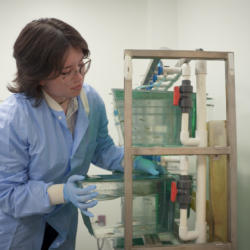
Twelve interns got hands-on experience at aquaculture facilities across the state.
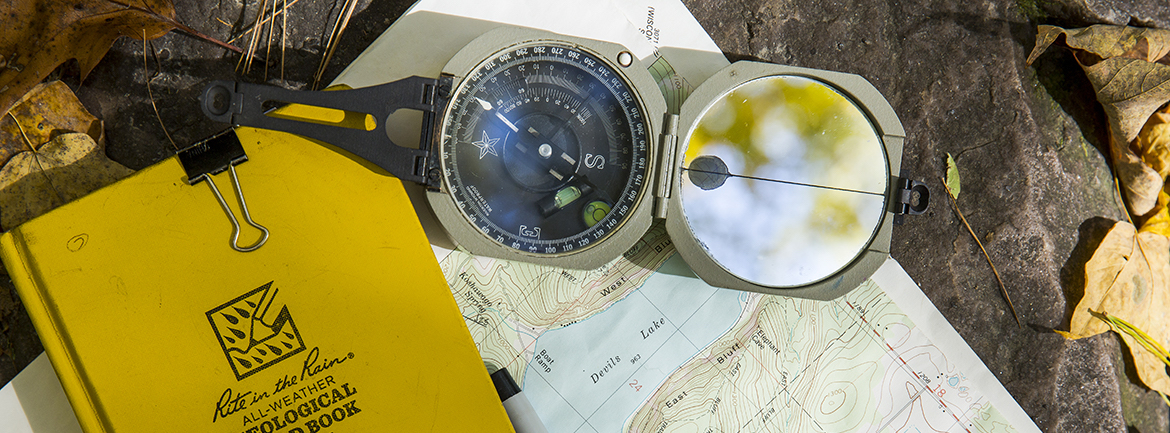
From monitoring water quality in Lake Michigan tributaries to coring trees in Door County, the students in the Freshwater@UW Summer Research Opportunities Program had a summer full of discovery. This year, the program supported 31 undergraduate students as they explored water chemistry, emerging contaminants, groundwater, fisheries, and more, gaining hands-on research experience that helped them envision Read more about Student Stories from the Field: A Summer with Freshwater@UW[…]
Ashley Lemke will discuss 10,000 years of underwater archeology in the Great Lakes.
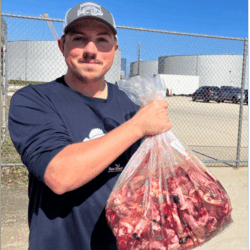
The contest is seeking creative ideas on how to use all parts of Great Lakes fish.
“Saving our Sturgeon: Protecting Wisconsin’s Ancient Fish,” tells the story of how conservation efforts rescued the famous fish from extinction.
The research team analyzed Google search data to find the types of questions people are asking about PFAS.
The event invites volunteers to search for aquatic invasive species in rivers, lakes, and wetlands.
Ryan Newton’s research will help protect public health and prevent future E.coli contamination at beaches.
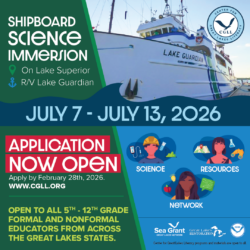
Three Wisconsin educators chosen to join Sea Grant aboard EPA’s research vessel on Lake Michigan
The waters of Lake Winnebago, Wisconsin’s largest inland lake, were once teeming with wild rice – so abundant that historical accounts describe boats struggling to pass through the beds. This native aquatic plant, known as “mayom” in the Mohegan language and “manoomin” in the Ojibwe language, has deep cultural and ecological significance, supporting fish, waterfowl, Read more about New video captures wild rice revival project in Lake Winnebago[…]