Three Wisconsin educators will spend July 7-13, 2026, working alongside scientists aboard the United States Environmental Protection Agency research vessel Lake Guardian as part of the Lake Superior Shipboard Science Immersion.
The immersion program is led by Sea Grant’s Center for Great Lakes Literacy, a network of Sea Grant educators throughout the Great Lakes region. The Center fosters informed and responsible decisions that advance basin-wide stewardship by providing hands-on experiences, educational resources, and networking opportunities promoting Great Lakes literacy among an engaged community of educators, scientists, and youth.
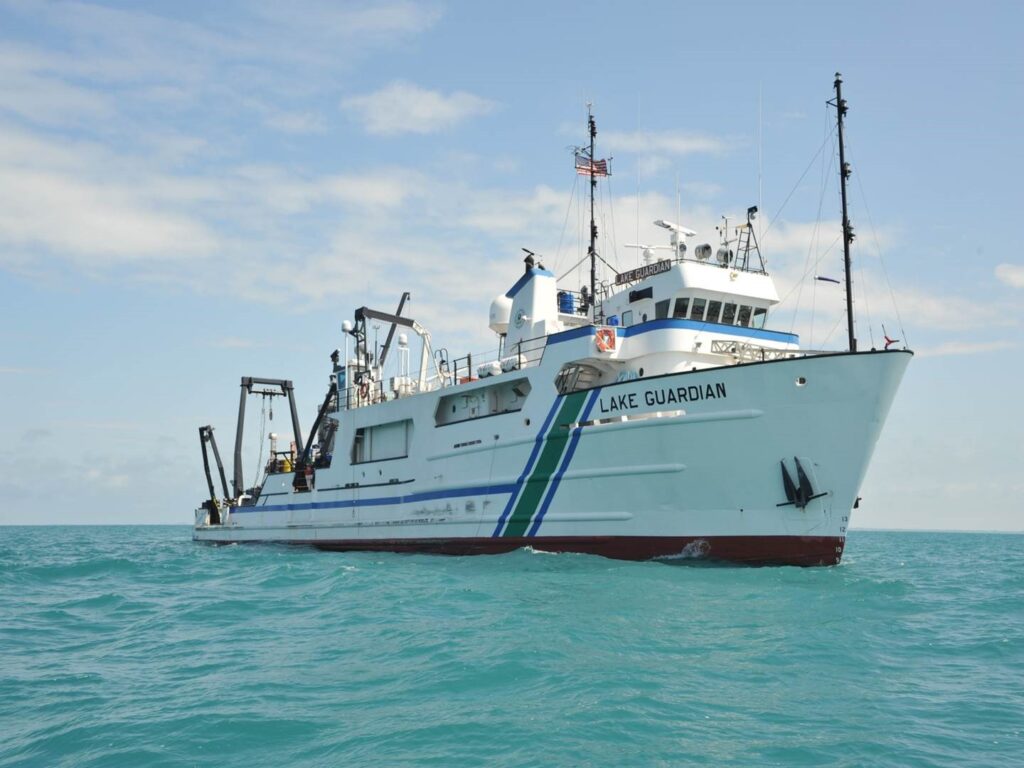
U.S. EPA’s research vessel Lake Guardian (EPA Photo).
“By living and working aboard the R/V Lake Guardian, educators can gain firsthand insight into Lake Superior science, stewardship efforts, and maritime careers that they can later share with their students and colleagues,” said project co-coordinator and Wisconsin Sea Grant Education Outreach Specialist Ginny Carlton.
With space to accommodate a total of fifteen educators from across the Great Lakes Basin, Wisconsin is well represented. The Wisconsin educators selected are:
- Nick Bonde, an educator from Marshall High School, Marshall Public School District, Marshall, Wisconsin
- Ann Perry, an educator from School of Options and Applied Research (SOAR) Charter High School, Northland Pines School District, Eagle River, Wisconsin
- Luciana Ranelli, an educator from Lake Superior National Estuarine Research Reserve, Superior, Wisconsin
The 2026 Lake Superior Shipboard Science Immersion is hosted by Sea Grant’s Center for Great Lakes Literacy partners Minnesota Sea Grant, Wisconsin Sea Grant, and Illinois-Indiana Sea Grant, with support from the National Sea Grant College Program and NOAA through a partnership among NOAA, the EPA Great Lakes National Program Office, and funding from the EPA Great Lakes Restoration Initiative.
For more information, visit the Center for Great Lakes Literacy.
###
The University of Wisconsin Aquatic Sciences Center administers Wisconsin Sea Grant, the Wisconsin Water Resources Institute, and Water@UW. The center supports multidisciplinary research, education, and outreach for the protection and sustainable use of Wisconsin’s water resources. Wisconsin Sea Grant is one of 34 Sea Grant programs supported by the National Oceanic and Atmospheric Administration in coastal and Great Lakes states that encourage the wise stewardship of marine resources through research, education, outreach, and technology transfer.