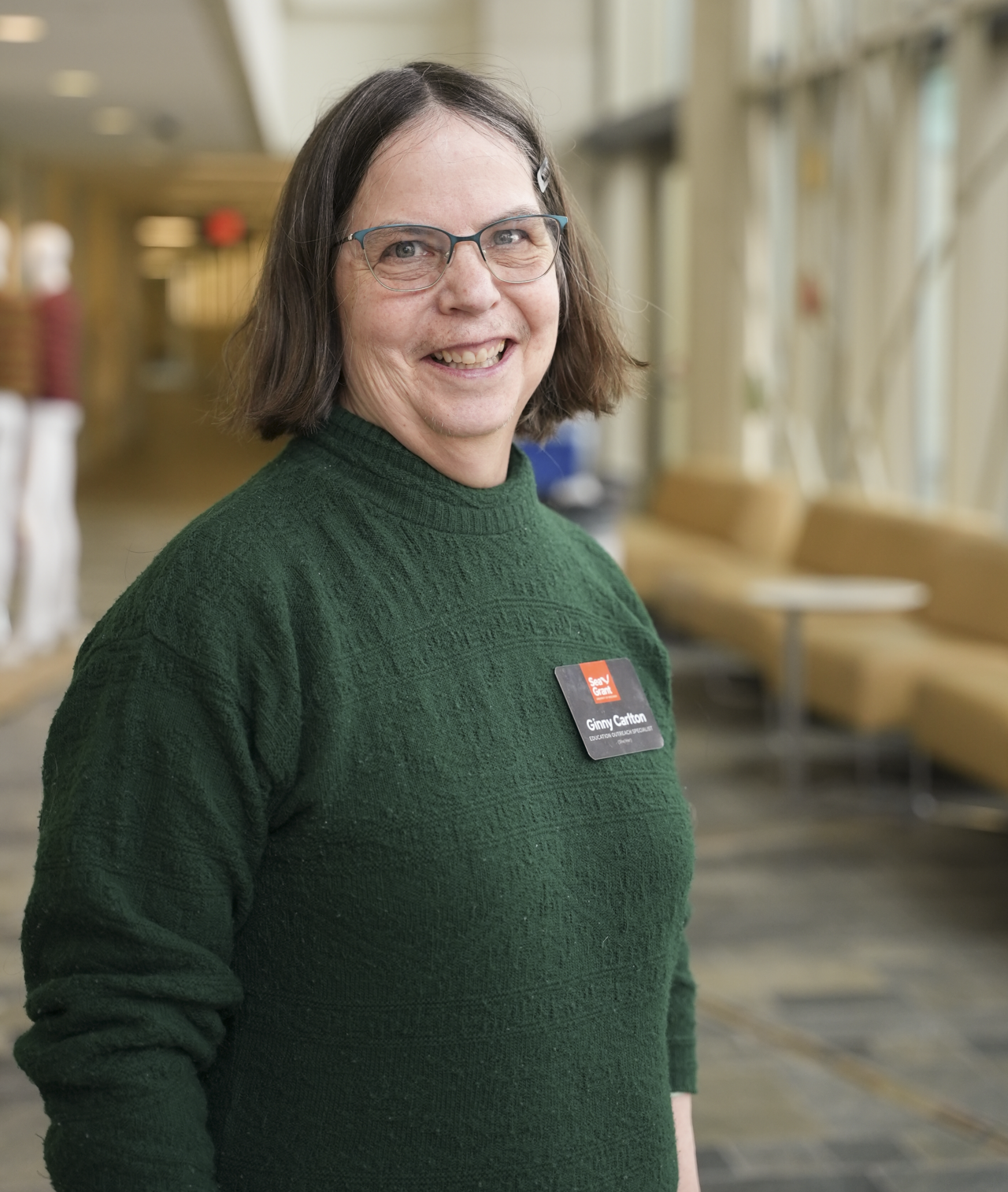
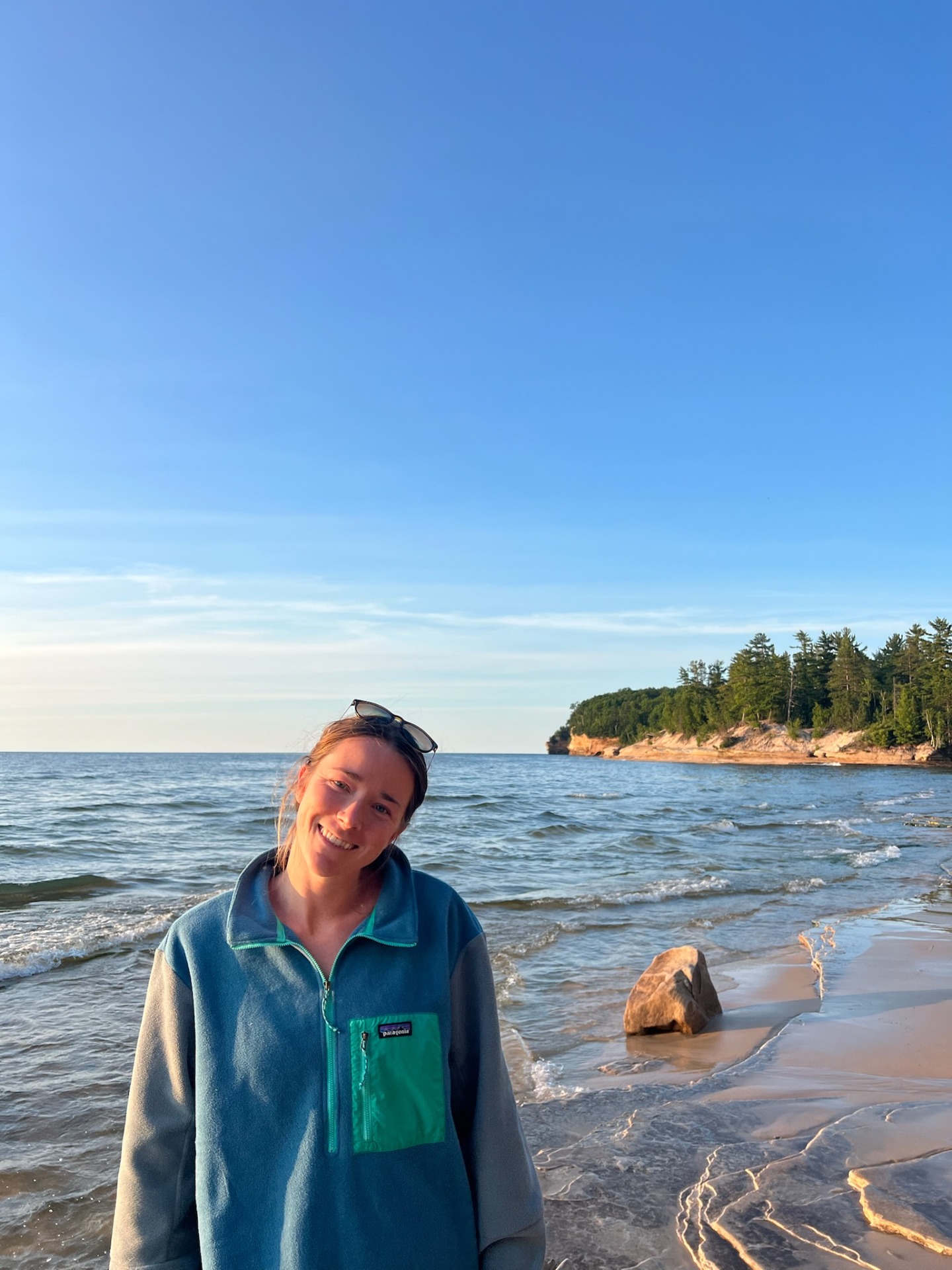
Cailin Young at the Pictured Rocks National Lakeshore along Lake Superior. (Submitted photo)
Cailin Young grew up watching sunsets on the California coast, but she doesn’t play favorites when it comes to big bodies of water.
“Looking out over Lake Michigan or Lake Superior, it pulls the same feeling out of me that looking at the ocean does,” she said. “I love the Great Lakes.”
As the inaugural Keillor-Wisconsin Great Lakes Coastal Leadership Academy Fellow, Young is busy getting acquainted with Wisconsin’s 800-plus miles of coastline. She’s charged with developing a series of workshops about coastal processes to help communities find ways to adapt to the ever-changing weather and water conditions of Lakes Superior and Michigan.
The Coastal Leadership Academy workshops will include discussions of how to deal with coastal hazards — things like high and low water levels, erosion, flooding, and storms — in ways that make sense for communities. A big city on Lake Michigan, for example, might address bluff erosion differently from a small town on Lake Superior.
“The goal is for attendees to walk away with a broader understanding and awareness of the different range of adaptation strategies they could implement, and how to take into consideration what does your community value and what would work for your shoreline,” she said.
Young, who hails from southern California, became interested in the Great Lakes while attending graduate school at the University of Michigan. Her capstone project explored Great Lakes policy and offered recommendations for protecting the open-water ecosystems of the lakes, which aren’t explicitly protected under any law.
Shipwrecks, on the other hand, are. And they’re often in open water.
“A lot of times, there’s fish habitat or reefs around the shipwreck,” said Young. “So, one of our recommendations to Michigan’s Department of Natural Resources was to open up that legislative language to allow for protection of ecosystems that are also in the same area.”
Her project also introduced her to coastal processes and resiliency, knowledge she’s been building upon as she designs the Coastal Leadership Academy workshops. Right now, Young is tailoring the workshops to be regionally specific. The pilot workshops will be held in three Great Lakes communities in Wisconsin: two on Lake Michigan and one on Lake Superior.
“What’s going to work on Lake Michigan isn’t necessarily going to work on Lake Superior. Even within Wisconsin, communities are completely different,” said Young. “There’s no one-size-fits all solution.”
Great Lakes communities may have different needs and priorities, Young notes, but they’re alike in how they regard the Midwest’s mighty inland seas.
“I love how they’re a uniting force. Everybody loves the Great Lakes. Everybody in this region knows about them,” said Young. “I really like that it’s a shared identity amongst multiple states.”