 In partnership with library associations, education groups, Sea Grant programs, and universities throughout the eight Great Lakes states and two Canadian provinces, the Wisconsin Water Library and Wisconsin Sea Grant, along with the Library of the Great Lakes, are excited to announce the books selected for the 2026 basin-wide shared-reading experience, Great Lakes, Great Read.
Great Lakes, Great Read is based on the One Book, One Community model where reading programs choose one book for libraries, community groups, and the public to read and enjoy together over the course of a year.
“It is incredibly exciting to launch the second year of a community read about the Great Lakes, especially as it gives us an opportunity to celebrate this beautiful watershed through literature. I can’t wait for readers to sit down with the three chosen titles and learn about the rich history and science of the Great Lakes,” said Anne Moser, director of the Wisconsin Water Library.
The titles for the 2026 Great Lakes, Great Read are:
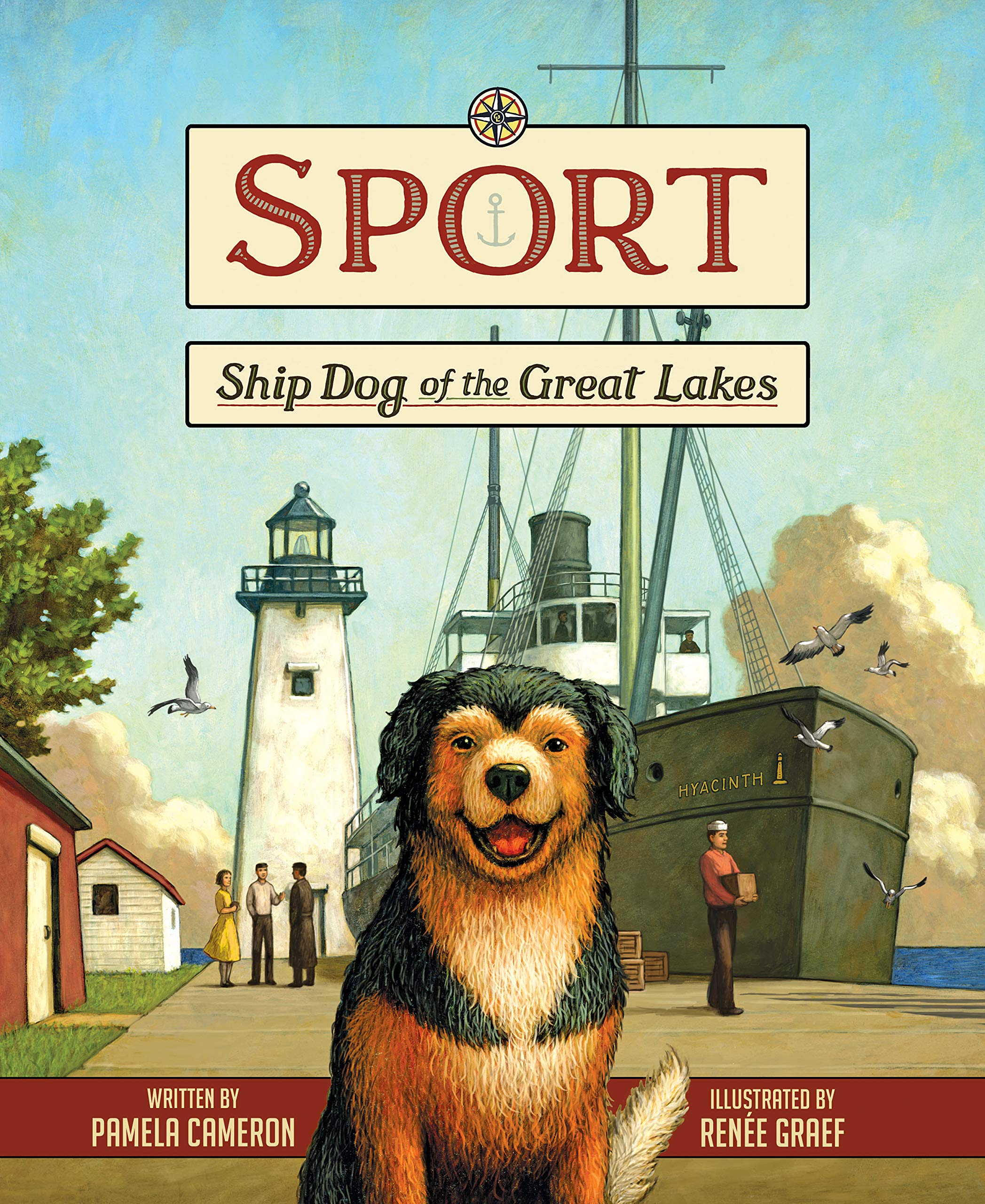
- “Sport – Ship Dog of the Great Lakes” by Pamela Cameron
- “Saving Our Sturgeon: Protecting Wisconsin’s Ancient Fish” by Rebecca Hogue Wojahn
- “The Gales of November: The Untold Story of the Edmund Fitzgerald” by John U. Bacon
The picture book selection, “SPORT – Ship Dog of the Great Lakes,” by Pamela Cameron is the true story of a puppy rescued during a storm by a sailor working on a Great Lakes tender (a boat that brings supplies to the various lighthouse keepers in the lakes). A delightful tale with wonderful illustrations, Cameron introduces us to Sport and his human companions as they deliver essentials to keep the lights on and ships safe in Lake Michigan.
The middle grade selection is “SAVING OUR STURGEON: Protecting Wisconsin’s Ancient Fish.” Author Rebecca Hogue Wojahn introduces readers to a very peculiar fish and the successful efforts that led to its continuing survival. Concerted efforts by children, indigenous communities, community scientists, and government organizations contributed to the return of the threatened species. With terrific illustrations and maps, we can all learn from this book.
John U. Bacon’s latest New York Times bestseller, “THE GALES OF NOVEMBER: The Untold Story of the Edmund Fitzgerald,” is our adult selection and is the definitive account of America’s most haunting maritime disaster. Bacon also provides a fascinating look at the history of Great Lakes shipping, the sailors and their families who dedicated their lives to the lakes, based on more than 100 interviews with the families, friends, and former crewmates of those lost.
“It is a great honor to have my book picked by the Library of the Great Lakes as one of its Great Lakes, Great Read selection — a wonderful way to reach those who love the Great Lakes as I do,” Bacon said.
The Great Lakes, Great Read website offers further details on the authors, their books, a toolkit, and other resources. Look for future announcements of region-wide webinars with each of the authors.
Several organizations, including the Library of the Great Lakes, the Gail Borden Public Library, Saginaw District Library, Swim Drink Fish, Biinaagami Project, Great Lakes Odyssey, and the Wisconsin Water Library at the University of Wisconsin–Madison, partnered in 2024 to create and carry out the Great Lakes, Great Read program. In-kind support was provided by the staff with the Wisconsin Water Library and Wisconsin Sea Grant and by the Wisconsin Library Association.
For more information, contact Anne Moser at akmoser@aqua.wisc.edu.
***
The University of Wisconsin Aquatic Sciences Center administers Wisconsin Sea Grant, the Wisconsin Water Resources Institute, and Water@UW–Madison. The center supports multidisciplinary research, education, and outreach for the protection and sustainable use of Wisconsin’s water resources. Wisconsin Sea Grant is one of 34 Sea Grant programs supported by the National Oceanic and Atmospheric Administration in coastal and Great Lakes states that encourage the wise stewardship of marine resources through research, education, outreach, and technology transfer.