Earlier this summer, students from Alverno College in Milwaukee, Wisconsin, had the opportunity to build their skills in fish farming. The students, who raise yellow perch and a variety of plants in an aquaponics system on campus, teamed up with the University of Wisconsin–Stevens Point Northern Aquaculture Demonstration Facility (UWSP NADF) to boost their knowledge and tour other aquaculture operations in northern Wisconsin.
Aquaculture is the growing of fish, shellfish, algae, and other aquatic organisms in all types of water environments. It’s also the fastest-growing segment of agriculture worldwide.
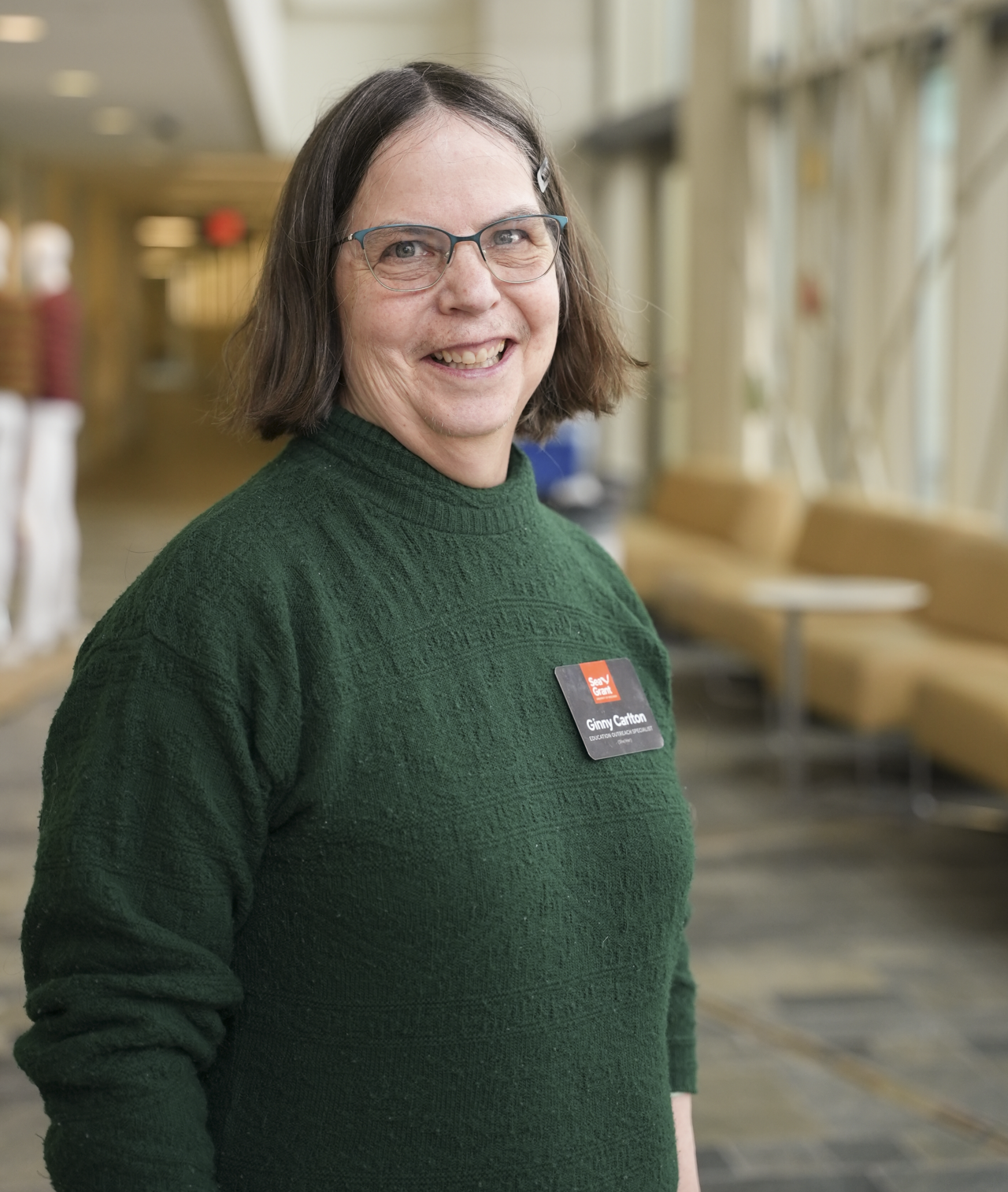
“Although aquaculture is one of the last agricultural businesses that come to mind for our region, there are actually over 2,000 registered fish farms in Wisconsin that raise fish for food, bait, stocking, or ornamentals,” said Emma Hauser, aquaculture outreach specialist with Wisconsin Sea Grant and UWSP NADF.
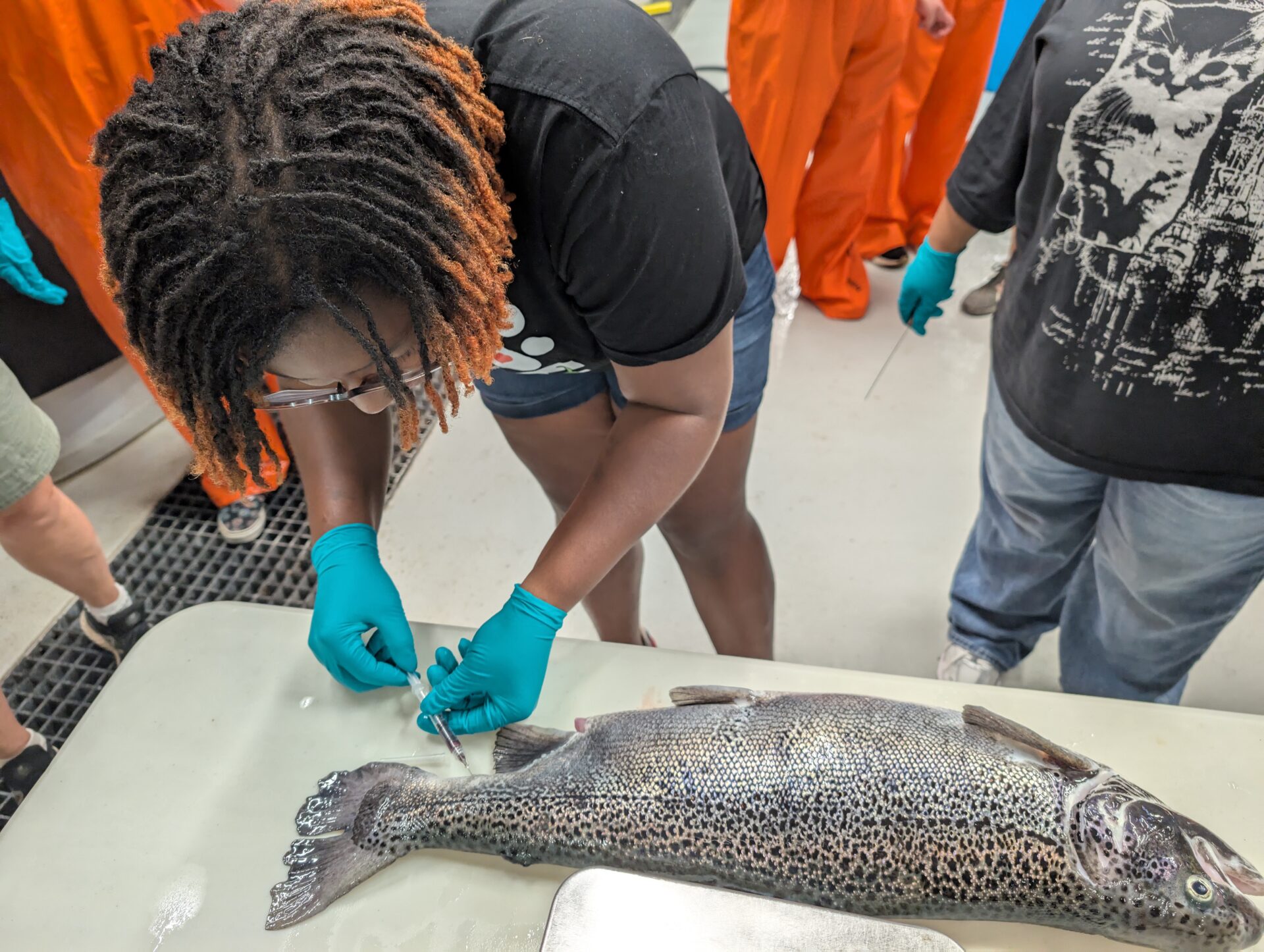
An Alverno student takes a blood sample from an Atlantic salmon. Photo: Emma Hauser
Funding from the Great Lakes Aquaculture Collaborative (GLAC) made the field trip possible, allowing the students to travel nearly seven hours north to UWSP NADF, located in Bayfield, Wisconsin. Amy Schrank, Minnesota Sea Grant extension program leader and project lead of GLAC, said that aquaculture is a good STEM education and workforce development tool.
“Students learn how to monitor water quality, care for fish, and get an idea of what it really takes to basically run a small business,” she said.
The field trip began with an interactive tour of UWSP NADF, where students gained experience in the daily operation and maintenance of the facility’s aquaculture systems, which includes ponds and flow-through and recirculating systems. They also participated in research, trying their hands (and arms) at securing nearly 30-pound Atlantic salmon for data collection that included height, weight, fat meter readings, and blood and mucus samples.
“Giving students a literal hands-on education in aquaculture is so important, especially since many students have never handled or even touched a fish before,” said Hauser. “This interaction isn’t only about learning but also about sparking interest in future careers.”
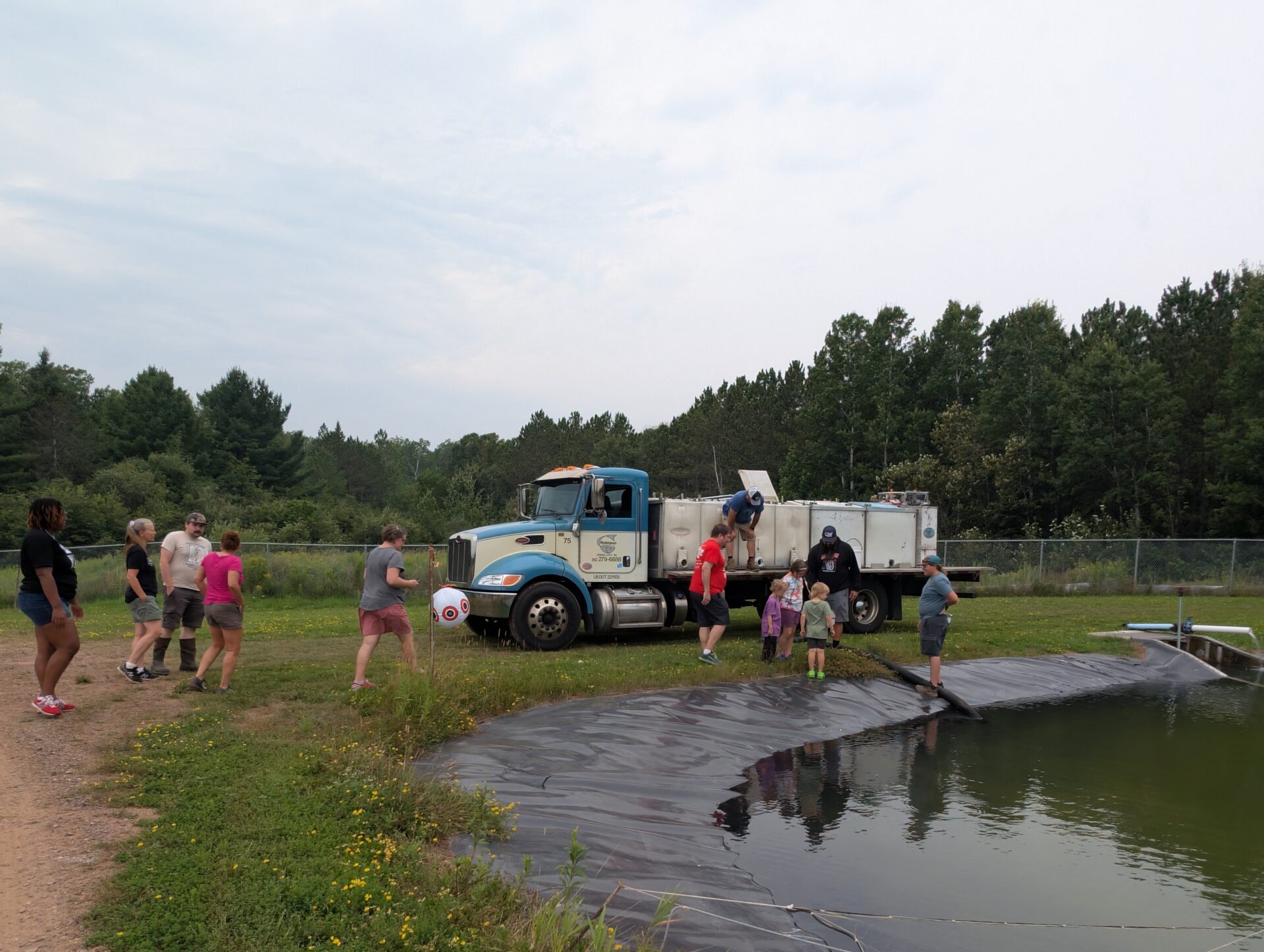
Alverno students tour an outdoor pond at the Red Cliff Tribal Fish Hatchery. Photo: Emma Hauser
Following the workshop, the group visited two other aquaculture facilities in the area. At the Red Cliff Band of Lake Superior Chippewa Tribal Fish Hatchery, they observed the stocking of forage fish to feed walleye in outdoor ponds, and they learned about raising and stocking cold-water fish at the historical Les Voight Bayfield State Fish Hatchery in Bayfield. The tour then culminated with a visit to one of the largest trout hatcheries in the Midwest, the Iron River National Fish Hatchery, which produces approximately 1.5 million lake trout and 65,000 coaster brook trout for stocking in the Great Lakes each year.
Rebekah Klingler, a professor of biology at Alverno, said the experience leveled up her students’ learning. She’s worked with UWSP NADF in the past, having taken virtual tours and interactive classroom lessons in fish health and anatomy with her students.
“Although Alverno is only a few miles from Lake Michigan, most of our students have never been fishing or handled fish before, let alone consider fish farming and/or research as potential career options,” said Klingler. “Our trip to NADF was absolutely eye-opening. I was thrilled to see how the students jumped right into the experience.”
***
The University of Wisconsin Aquatic Sciences Center administers Wisconsin Sea Grant, the Wisconsin Water Resources Institute, and Water@UW. The center supports multidisciplinary research, education, and outreach for the protection and sustainable use of Wisconsin’s water resources. Wisconsin Sea Grant is one of 34 Sea Grant programs supported by the National Oceanic and Atmospheric Administration in coastal and Great Lakes states that encourage the wise stewardship of marine resources through research, education, outreach, and technology transfer.