
New coastal engineering curriculum connects middle schoolers to the Great Lakes
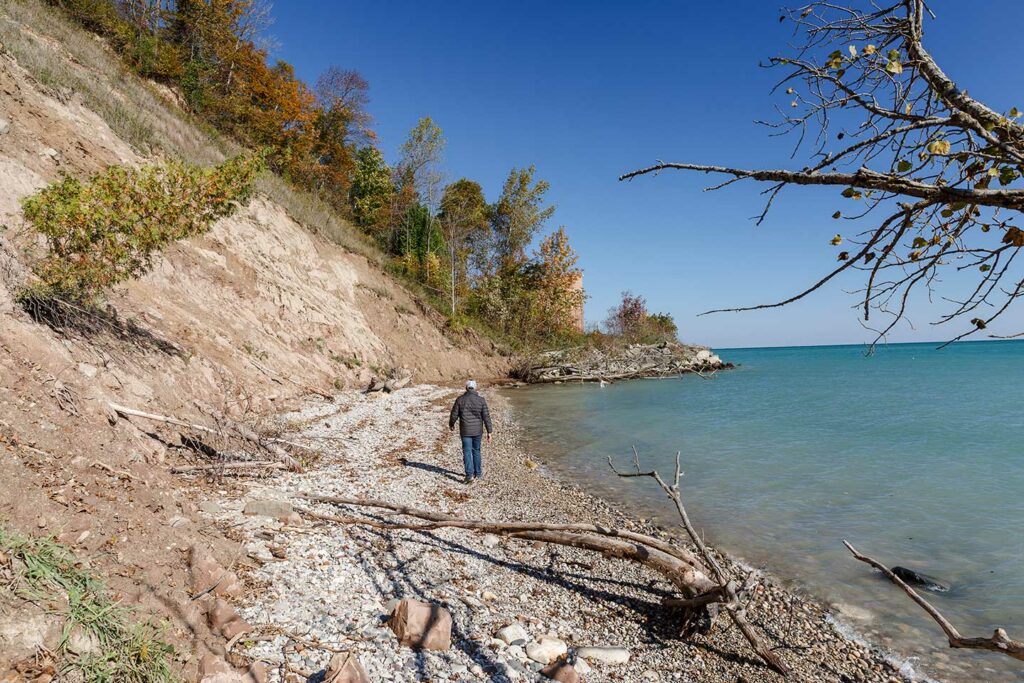
When educator Nancy Carlson talks about Great Lakes coastal erosion, her students don’t have to imagine crumbling bluffs or shrinking beaches. They’ve seen it.
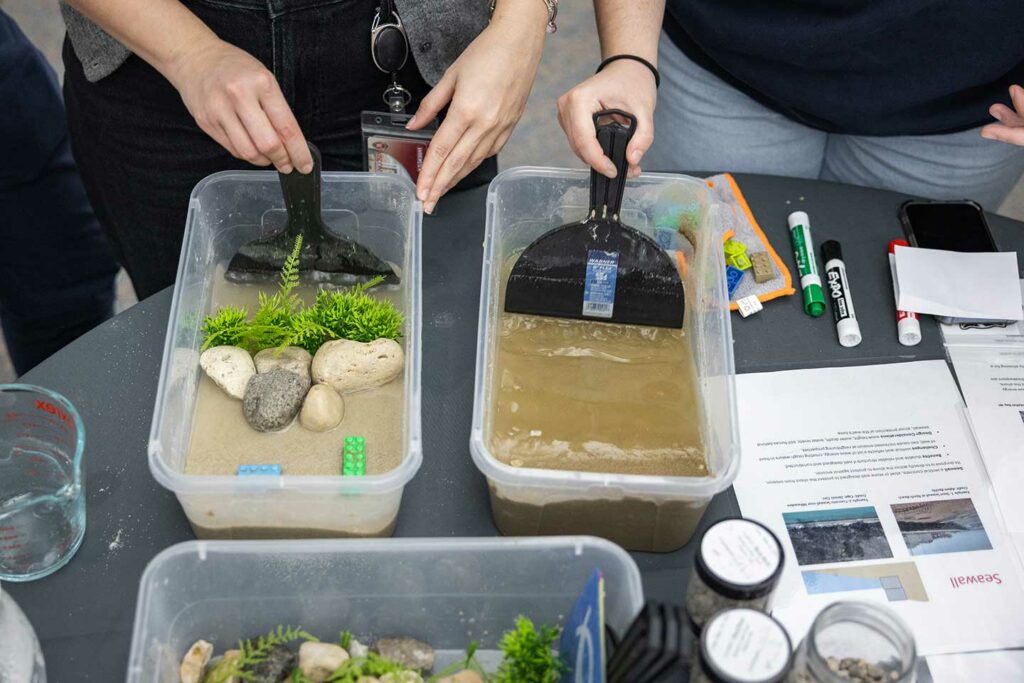
Now, with the help of a new coastal engineering curriculum from Wisconsin Sea Grant, Carlson and other educators can help their students understand how erosion occurs and affects coastal infrastructure, like homes. The six lesson plans are geared toward middle schoolers and cover Great Lakes coastal processes, engineering structures, stormwater management, and green infrastructure. They also feature hands-on activities — like using a homemade wave tank to simulate beach erosion — that get students collaborating and problem-solving like engineers.
The curriculum also helps kids notice and make sense of what they see along the coast, whether that’s a house dangling off a bluff or rocks that protect the shoreline from erosion. Carlson has led several of the hands-on activities described within the lesson plans and said they’re always a hit.
“This has been so well received here and so fun,” she said.
Adaptable, place-based education
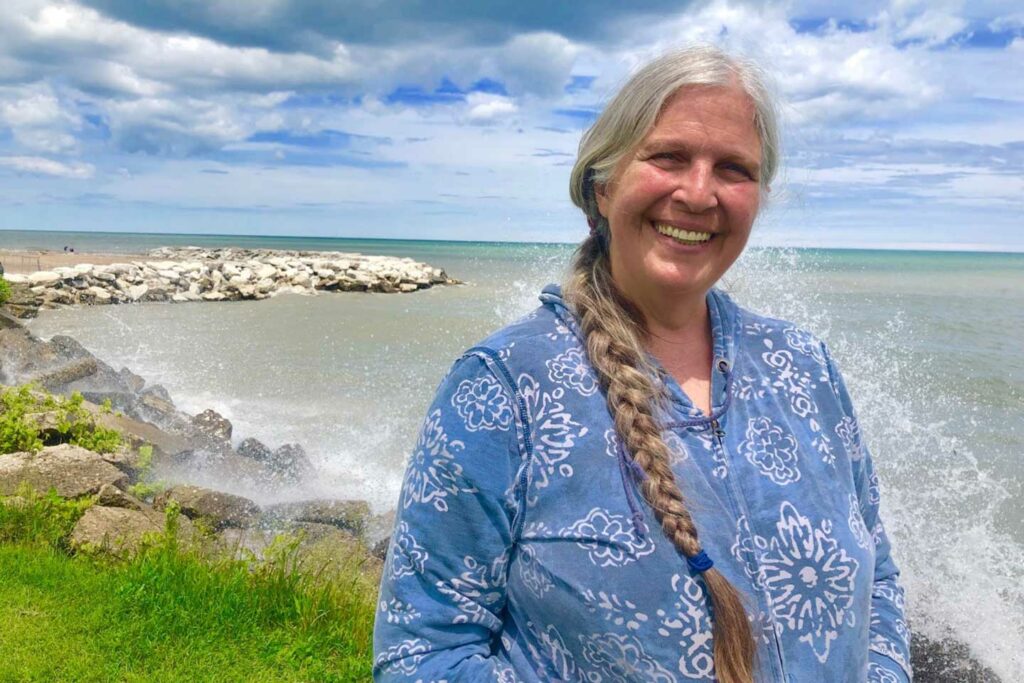
Wisconsin Sea Grant education outreach specialist Ginny Carlton, librarian and education coordinator Anne Moser, and coastal engineer Adam Bechle developed the curriculum with funding from a NOAA Bay Watershed and Education Training grant. Carlton said the idea grew out of a desire to highlight Bechle’s coastal resilience work with the city of Racine.
The team also wanted to help teachers meet updated science standards.

“Many of the school districts have adopted what are called the Next Generation Science Standards, and those standards, as they were revised, have a much stronger focus on engineering than previous science standards did,” said Carlton. “So, there’s an opportunity to create things in the engineering realm.”
The lesson plans revolve around North Beach in Racine, but teachers living anywhere in the Great Lakes Basin can use them in their classrooms. Carlton emphasized that the goal from the beginning was to make the curriculum place-based, but adaptable.
“The concepts themselves are broadly applicable. Sediment transport and currents and waves — you know, they happen on all of the Great Lakes. So, that is relevant to everyone,” she said.
The place-based aspect resonated with Bechle, who grew up in Green Bay but didn’t feel connected to Lake Michigan.
“There’s an amusement park on the shore of the Bay of Green Bay, and then it’s pretty industrial. So, there’s not a lot of access points where you go and explore the beach and you see the changes,” he said.
He drew on that perspective when developing the lesson plans, reflecting on what a younger Adam might have noticed or been curious about on the beach. The challenge was to then translate those coastal engineering topics for a middle school audience.
“Ginny and Anne were critical in toning down my over-enthusiastic engineering technical information into something that’s manageable,” he said.
Making waves with the wave tank
The centerpiece of the coastal engineering curriculum is the wave tank activity, where students combine water and sand in a plastic container to simulate and observe how waves erode the beach. Carlson, the Racine-based educator, was an early user of the curriculum, and she’s noticed how engaged students are with the activity, particularly when it becomes their job to protect a plastic house perched on the sand. That’s when they get invested.
“Now, they have something they really have to protect: their houses. So that’s a riot. They love that,” she said.
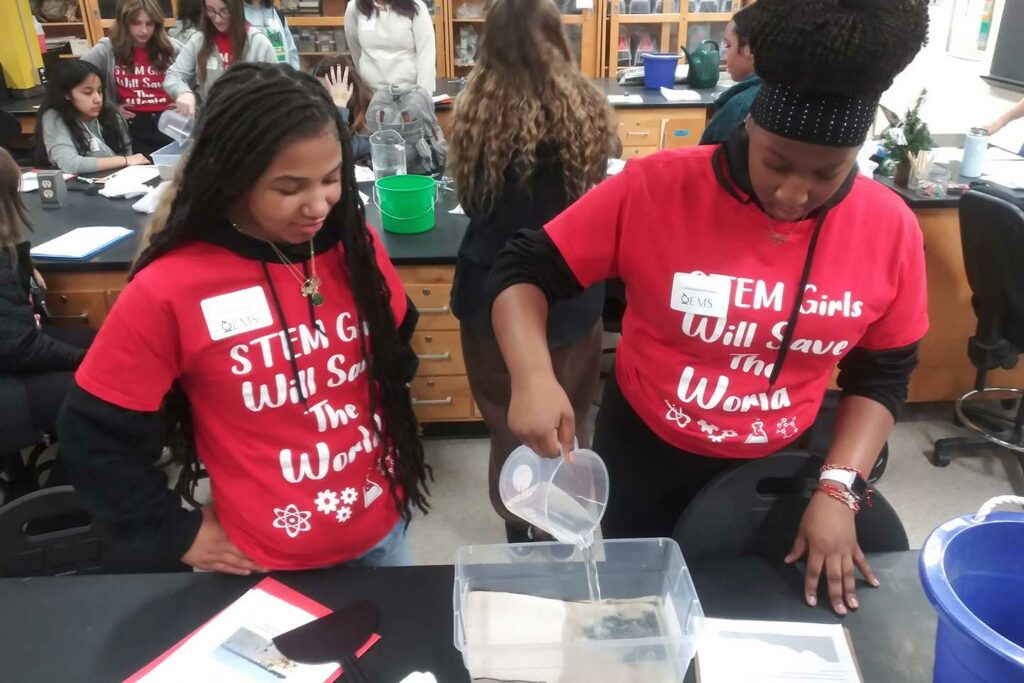
In fact, the activity is so engaging that students will set aside their usual adolescent grievances for the good of the house.
“One teacher was like, I cannot believe this. I cannot believe my kids are getting along like this,” said Carlson. “They work together as a team. It’s just such a beautiful thing.”
Teaching the curriculum has also been rewarding for Carlson, who’s added it to her repertoire of water literacy activities. It helps her to connect local students to Lake Michigan, who are often unaware that one of the planet’s greatest freshwater resources is in their backyard.
“One of the things I’m passionate about is getting our kids to appreciate and love the Great Lakes and love the community they live in,” she said. “And unless they start at a young age, who’s going to care about it?”
The UW–Madison Aquatic Sciences Center administers Wisconsin Sea Grant, the Wisconsin Water Resources Institute, and Water@UW–Madison. The center supports multidisciplinary research, education, and outreach for the protection and sustainable use of Wisconsin’s water resources. Wisconsin Sea Grant is one of 34 Sea Grant programs supported by the National Oceanic and Atmospheric Administration in coastal and Great Lakes states that encourage the wise stewardship of marine resources through research, education, outreach, and technology transfer.